Who won the social media air war in the 2024 UK election?
No party dominated social media in the 2024 UK general election: Rishi Sunak won Instagram, Nigel Farage and Reform won Facebook and X, and Labour won TikTok. Writing in The House, Ben Guerin, co-founder of Topham Guerin, argues that Labour’s real edge online came from out-spending every other party on targeted ads, not from standout content.
- Published in
- The House
- By
- Ben Guerin
- Published
- 16 July 2024
- Type
- Opinion
- Topics
-
- 2024 UK general election
- political social media
- TikTok
- digital advertising
What we argued
- Rishi Sunak won Instagram with 4.2m engagements; Reform led on Facebook (2.1m engagements) and X (39bn views)
- Labour won TikTok with 7.5m engagements and 75m views, more than the other parties combined
- Labour out-spent every party on Facebook, Instagram and Google ads, and was the top spender in 376 constituencies (Who Targets Me)
- Nigel Farage fronting his own video and embracing meme culture helped Reform win 14.3% of the national vote
- The Lib Dems’ broadcast stunts and hyper-local issues did not translate into platform-native content
For a historic election that ended 14 years of Conservative government, the social media campaigns from the main parties were surprisingly tame.
While the new Labour Prime Minister and his team will be very happy with their 174-seat majority, the social media contest didn’t have a clear winner.
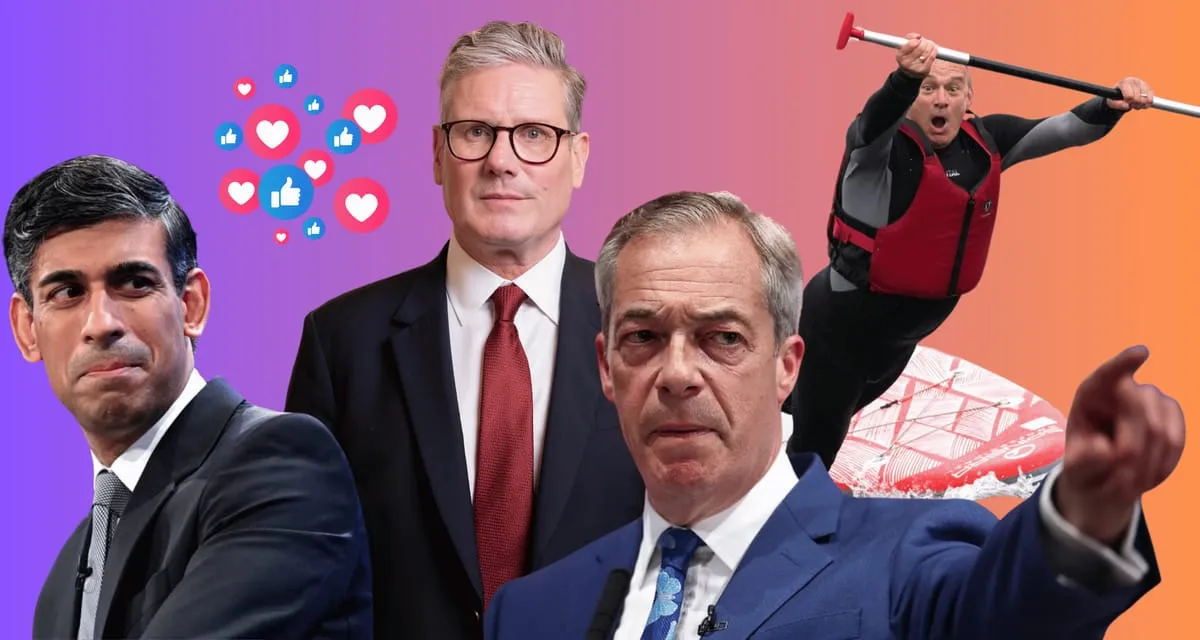
After all, Rishi Sunak may not have won the election, but he did win on Instagram with 4.2m engagements – more than any other leader. Nigel Farage and Reform dominated Facebook and Twitter (now X), with 2.1m engagements on Facebook and 39bn views on X.
However, Labour dominated on TikTok, racking up 7.5m engagements and 75m views, more than the other parties combined. They reached triple the views and six times the engagement that the Conservatives achieved on the platform. Labour’s digital success was helped by embracing memes and following popular trends. Their digital team clearly understand how TikTok works as a platform, so their content felt natural and authentic.
This is consistent with what we saw in New Zealand’s 2023 election, where the National Party – just like UK Labour – was able to crack the formula for TikTok success and deliver a change of government.
Labour ran a slick and sophisticated digital operation that did all the right things – but most voters would probably struggle to remember any particular stand-out social media content from them.
This didn’t really matter, though, because Labour spent far, far more on Facebook, Instagram and Google advertising than any other party, along with heavyweight ‘takeovers’ of the big online news sites including The Sun and the Daily Mail, that ensured their simple message of ‘Change’ cut through.
Labour didn’t just spend more overall, they spent money where it mattered – with a targeted approach they were the highest-spending party in 376 constituencies (according to Who Targets Me). The digital team also supported local candidates to get their message out online, and cleverly used lots of user-generated content with compelling video testimonials from people making the case for change.
While Ed Davey’s stunts made for great broadcast coverage, the Lib Dems weren’t able to translate that into engaging platform-native social media content. The hyper-local focus of the Liberal Democrat campaign machine probably works against them when it comes to trying to win the air war on social media, as potholes and planning reform don’t get the same kind of emotional response on the newsfeed as other topics.
In contrast, we all know Nigel Farage has never been camera-shy, and his willingness to front his own personal video content and fully ingratiate himself into meme culture on TikTok was key to Reform winning 14.3 per cent of the national vote share (more than the Liberal Democrats’ 12.1 per cent) – even if they only managed to win five seats compared to the Lib Dems’ 72.
While Labour is the biggest party on TikTok, Farage’s more than 800k followers on the platform make him by far the biggest personality, helping #ReformUK become the fastest growing political TikTok hashtag.
This election was always going to be an uphill battle for the Tories. Against a backdrop of a dissatisfied electorate that was ready for something different, the Conservatives’ digital strategy pushed the risks of a Labour government with visuals including a tube of superglue branded ‘Labour Supertax’.
Given the polls narrowed towards the end of the campaign this could indicate their messaging achieved a degree of cut-through, but it clearly wasn’t enough.
“For a historic election that ended 14 years of Conservative government, the social media campaigns from the main parties were surprisingly tame.”
Ben Guerin
“Labour ran a slick and sophisticated digital operation that did all the right things – but most voters would probably struggle to remember any particular stand-out social media content from them.”
Ben Guerin
- 7.5m Labour TikTok engagements, from 75m views
- 4.2m Instagram engagements for Rishi Sunak, more than any other leader
- 376 constituencies where Labour was the top digital spender
Questions & answers
Which party won the 2024 UK election on social media?
No single party. In Ben Guerin’s analysis, Rishi Sunak led on Instagram with 4.2m engagements, Reform led on Facebook and X, and Labour led on TikTok with 7.5m engagements and 75m views.
How did Labour win the digital campaign?
Mostly through paid reach. Labour spent far more than any other party on Facebook, Instagram and Google ads, plus takeovers of big news sites, and targeted its money: it was the highest-spending party in 376 constituencies, according to Who Targets Me.
Why did Reform do so well on TikTok?
Nigel Farage fronted his own video content and embraced meme culture. With more than 800k followers he was by far the biggest political personality on the platform, and #ReformUK became the fastest-growing political TikTok hashtag.